
Every year, Food 4 Farmers pauses to look at what we’ve accomplished alongside the coffee farming families we partner with. The people who grow the coffee in our mugs are often the ones who struggle to put enough food on their own tables, especially during los meses flacos, the lean months between harvests. We believe our supporters deserve a clear, honest look at the difference their generosity makes. So here’s a look at our impact, and why the numbers, as important as they are, only tell part of the story.
In the communications world, we’re conditioned to worship the headline number. We crave neat, astronomical figures that look sleek on an annual report cover or stop someone mid-scroll on LinkedIn. In global development, that appetite is constantly fed by top-down corporate giants and institutional funders—conglomerates that can announce hundred-million-dollar sustainability initiatives with the stroke of a pen.
Next to those massive balance sheets, a grassroots non-profit’s metrics can easily be misunderstood. Over the past 15 years, Food 4 Farmers has invested $5 million into coffee farming communities where the people growing our morning coffee often can’t afford to feed their own families. To a traditional grantmaker scanning a spreadsheet, $5 million across a decade and a half might sound modest. But as a communications professional and a Food 4 Farmers board member, I know the dirty secret of our industry: large numbers are often used to conceal shallow roots, while grassroots figures fail to convey the depth of real change.
When change is community-led, the math stops behaving linearly. The true impact lives in the unquantifiable ripple effects that an infographic simply cannot capture.
Consider 504,000 pounds of honey produced. On paper, half a million pounds is an abstract, static volume. But to a smallholder coffee farmer facing los meses flacos—the lean months between harvests when coffee income dries up and families routinely skip meals—that honey represents survival, nutrition, and autonomy. It is a secondary cash crop that buffers against market volatility and climate shocks, while bees actively boost the pollination and yields of nearby coffee plants and subsistence crops. A metric tracks the weight of the harvest; it cannot track the generational shift when a farmer uses that honey revenue to fund their child’s education.

That shift relies on another figure: 5,000 educational workshops hosted. It’s easy to report workshop attendance, but attendance is just logistics. The real outcome is agency. Before joining our api-escuela (beekeeping school), a beekeeper named Onésimo watched his earnings disappear into costly trial and error. As Onésimo put it: "After learning at the beekeeping school, I finally had the confidence to know what came next—and just as importantly, what mistakes to avoid."
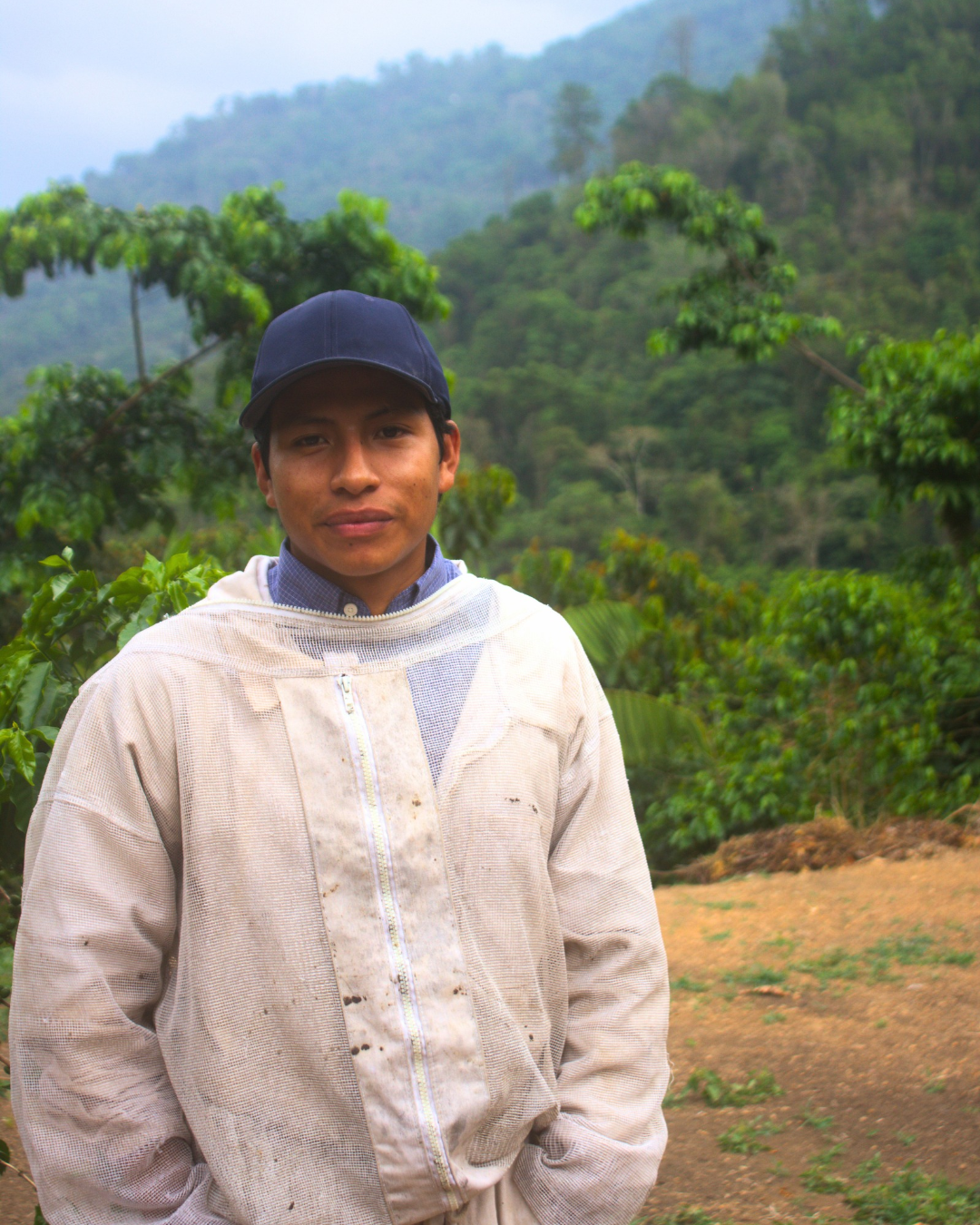
"After learning at the beekeeping school, I finally had the confidence to know what came next—and just as importantly, what mistakes to avoid."
Onésimo Morales Bravo | Beekeeper & Educator
CESMACH - Chiapas, Mexico
We see the same multiplier in young farmers like 24-year-old José Manuel Vázquez Roblero in Chiapas, who inherited five struggling hives and, through practical training, doubled his apiary to build a resilient second income. When a farmer masters hive management or soil biology, they do not keep it to themselves. They teach their siblings, their neighbors, and their cooperative peers. Farmer-to-farmer knowledge sharing is an infinite ripple—and inherently impossible to capture on a dashboard.
Finally, look at 260,000+ fruit trees planted. Plant counters love this metric because it looks like reforestation. But at Food 4 Farmers, these aren’t conservation trophies planted and abandoned. In 2025, through our partnership with the Regional Action Group (GAT) in Chiapas, 80 families planted 6,598 avocado, orange, lemon, and mandarin trees alongside diversified home gardens and traditional corn-and-bean plots. These trees nourish families directly, yield surplus fruit for local farmer’s markets, regenerate soil health, and serve as open-air classrooms for 78 local children learning environmental stewardship.
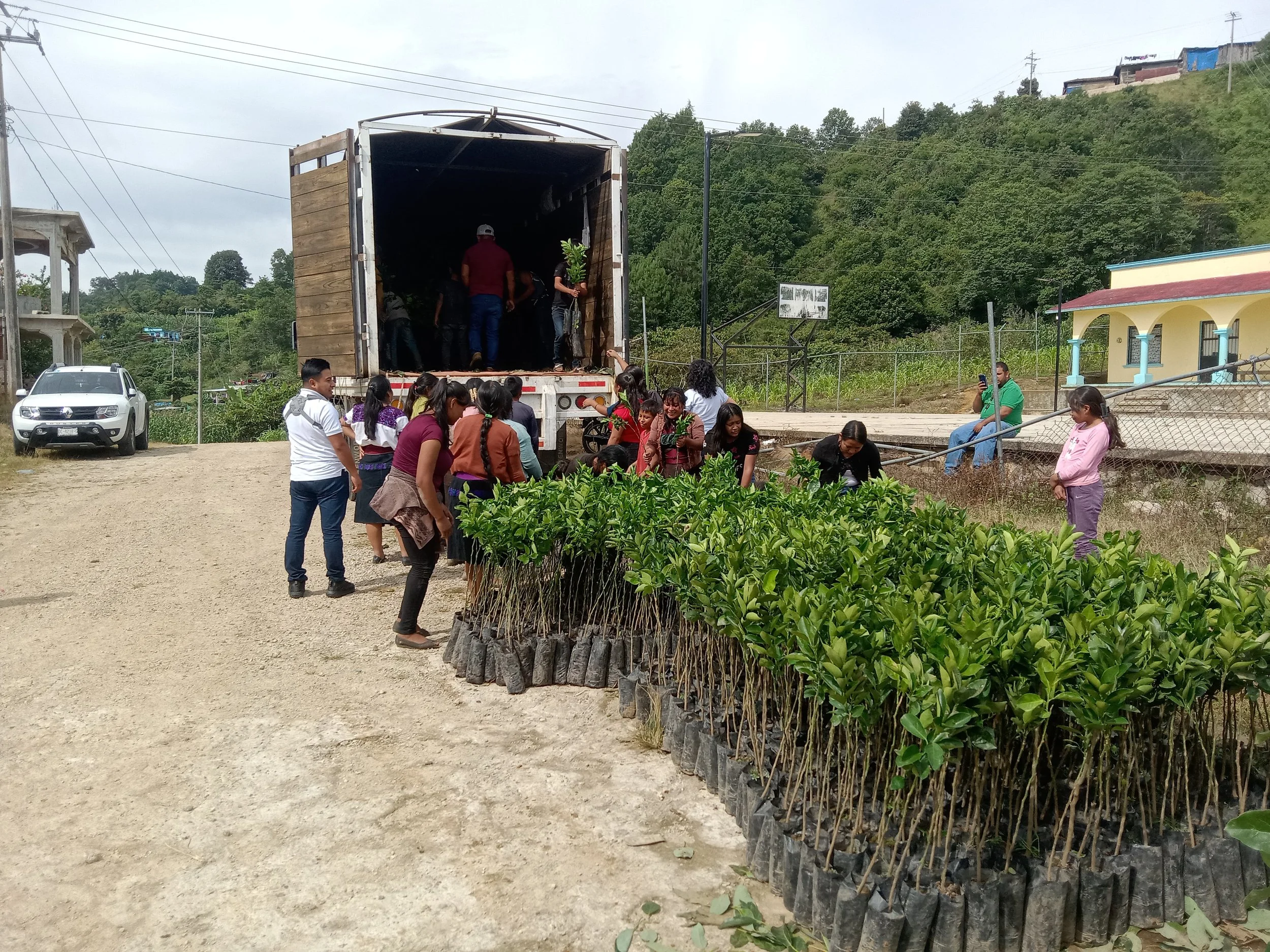
How do you distill that into a soundbite? You can’t.
Top-down capital often prioritizes reach over endurance, pouring dollars into temporary interventions that fade the moment the project cycle ends. Food 4 Farmers works from the roots up. Our $5 million didn't purchase short-term aid; it seeded local infrastructure, agroecological knowledge, and community self-reliance.
As communicators and advocates, it is time we stop letting corporate-scale vanity metrics define what effective development looks like. The most transformative work in food security isn’t found in eight-figure press releases. It lives in the quiet, compounding resilience of a family that now has food on the table all year long.