
When Water Runs Short: The Impact of El Niño on Coffee-Growing Communities
Across Latin America, the coffee growing families we work with are facing one of the most challenging climate events in recent memory. The Super El Niño has brought prolonged, intensifying drought to major coffee regions, reducing rainfall to well below average and sending temperatures climbing throughout 2026. The most urgent threat is water itself. Drinking water is critically scarce for many communities. Springs are drying up, river levels are dropping, and families are travelling farther and spending more to secure drinking water for their households, before they can even think about their crops.
The long-term forecast offers little relief. Colombia’s national weather agency, IDEAM, has said the Super El Niño conditions are more than 95% likely to persist and intensify through early 2027. In Cauca, Colombia, where our partner COMEPCAFE represents 1,388 coffee growing families across 9 municipalities, rainfall has been below average since March 2026. One nearby municipality declared a public emergency after its water supply shrank by nearly 60%, and a dozen municipalities nationwide have had to ration water.
Here is what our partners in Colombia, Mexico, Guatemala, and Nicaragua are seeing on the ground:
Reduced Coffee Harvests
Coffee is the livelihood these communities are built around, and it is under stress at every stage of its life cycle. In Cauca, an estimated 40% of coffee plants under a year old are dying from lack of water, a devastating setback for producers who have invested time and resources into renewing their plots. In addition, mature plants are wilting and not producing fruit, adding significant risk to the 2027 harvest.
In the Chiapas Highlands of Mexico, our partners CESMACH and GAT report scorched cherries, early ripening, and poor fruit fill, especially where shade cover has thinned. In Huehuetenango, Guatemala, ACODIHUE reports that plants are not setting fruit at all with the lack of water.
Because coffee is the main source of cash income for these families, a small harvest means less income for the year ahead.
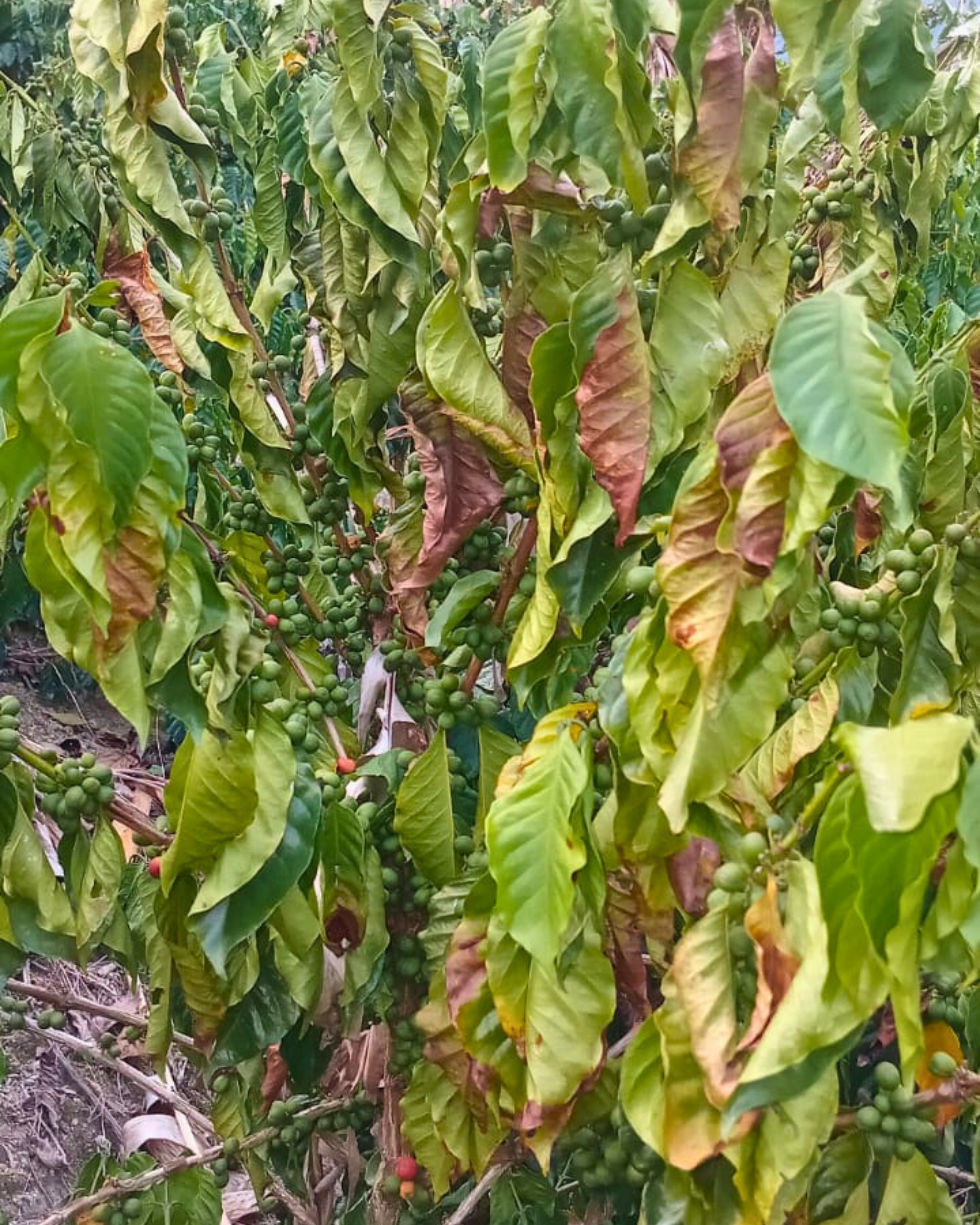
A Harvest At Risk
Drought-stressed coffee plants in Aldama, Chalchihuitán, and Pantelhó, where dry conditions are scorching leaves and putting this year’s harvest at risk.
Food Production Threatened
Gardens and staple crops that feed coffee growing families are struggling just as much. In Huehuetenango, ACODIHUE estimates that 90% of corn and bean crops have been lost, and family gardens have stalled because planting has stopped altogether. In Chiapas, corn has failed to develop in several communities, forcing some families to buy grains they would normally grow themselves. Seeds are failing to germinate, and young vegetable plants are burning up in direct sun.
Even in Nicaragua, where some SOPPEXCCA members with reliable water sources have been spared major disruptions, cooperatives in places like El Cua had to wait for better conditions to plant home gardens this year, missing most of the production season.
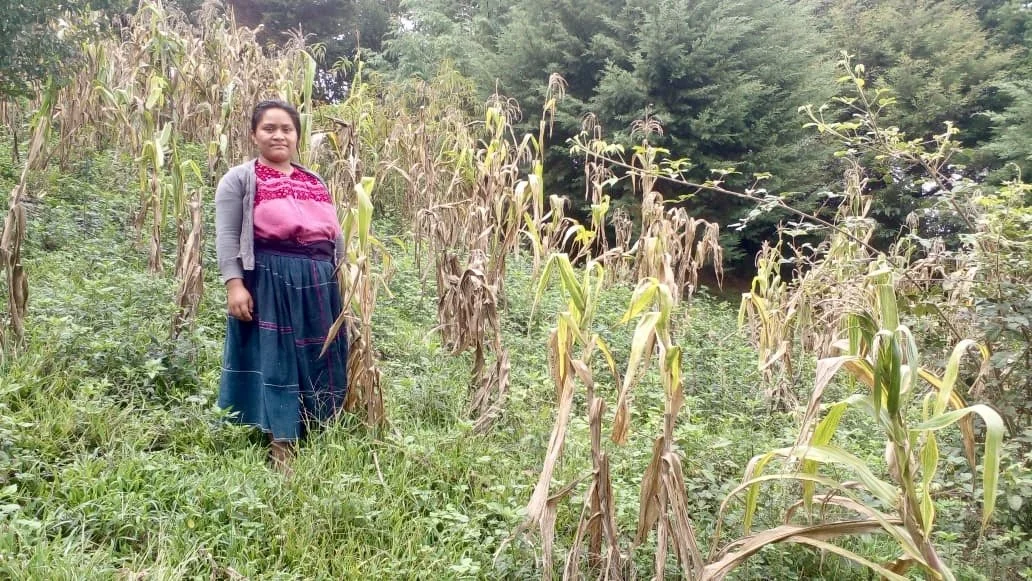
Holding On Through The Drought
A woman farmer stands among drought-damaged corn plants, their leaves dry and withered.
Fruit Trees Strained
Fruit trees, another important source of household nutrition, are feeling the heat as well. In Chiapas, farmers report reduced flowering, which means lower expected harvest of the fruit families rely on to supplement their diets.
Beekeepers Struggling
Bees are suffering along with the plants they depend on. ACODIHUE reports that bee populations in Huehuetenango have decreased significantly, putting honey production and pollination at risk. In the Sierra de Chiapas, honey reserves have held so far, but reduced flowering could limit nectar and pollen by the February-April season.
For many families, beekeeping is a crucial way to diversify income beyond coffee, which makes these losses especially difficult.
How Coffee Growers Are Adapting
Families and cooperatives are responding with creativity and solidarity:
Sharing scarce water. Throughout the region communities are prioritizing drinking water for people, hauling water from farther-away sources, drawing on private reservoirs some producers maintain, and coming together regionally to set rationing plans and shared use agreements. Food 4 Farmers is supporting this initiative by prioritizing investment in water collection tanks, filtration, and irrigation systems.
Protecting coffee plants. Through training and resources provided by F4F, co-ops are promoting coffee pulp mulch to hold moisture, along with organic fertilizers like Bocashi to keep plants nourished under stress.
Conserving water in gardens. F4F program participants are putting their agroecological training to work by adopting soil and water conservation practices that help gardens retain moisture.
Supporting bee colonies. Beekeepers are advised to feed their bees every 15 days and are receiving genetically improved queen bees from ACODIHUE’s queen bee rearing program funded by F4F to help colonies recover.
Why Diversified Livelihoods Matter
The Super El Niño’s impact isn't the same in every community, even within the same cooperative. But for many families, the uncertainty is already weighing heavily. As Fatima Ismael, the general manager of SOPPEXCCA cooperative, put it, the Super El Niño is “going to force us to recognize the increasing need for family vegetable gardens.” She added that she thinks the outlook for food supplies is grim.
Her words capture why food security programs matter so much for coffee growing families. When a single crop’s cycle is disrupted by drought, then the intervention of gardens, fruit trees, beekeeping, and diversified crops can mean the difference between hardship and crisis.
As water scarcity continues to strain communities with rising tensions over access to water sources and the increase of food prices further threatens food security, we are committed to supporting coffee-growing communities in finding lasting solutions to both crises. We are currently working with our co-op partners to assess and respond to the most immediate needs. We are seeking funding to distribute water collection tanks, filtration systems for potable water, and irrigation supplies to the communities most vulnerable to the effects of El Nino.
As more reports come in from our partners across Latin America, we’ll keep sharing what we’re seeing and how Food 4 Farmers and our cooperative partners are adapting to support these families.
