
2025 Reflections from Executive Director, Marcela Pino
The recent completion of our 2025 Program Impact Report has given me the opportunity to reflect on the results from last year. We deepened our relationships with existing partners, established new ones, and ventured into new program activities. We are proud of everything that was accomplished and encourage you to read the following report.
During the process of reviewing each program partner's reflections and successes and compiling them for the report, I found myself inspired to share with you a couple of new partnerships and activities that came to fruition in 2025. I am personally very excited about them.
In 2025 we began a collaboration with a group in Chiapas, Mexico called Regional Action Group or GAT for short. This group is a coalition of three non-profit organizations, each with long histories of rural development in Chiapas; Fondo para la Paz, PROASUS, and Caritas-Mexico. These organizations came together to improve the lives of the indigenous population of Los Altos, Chiapas, a region that has frequently experienced sociopolitical unrest and is where much of the Chiapan coffee is produced. We identified this coalition as a potential food sovereignty project partner because of their emphasis on bringing regional peace through the strengthening of food production practices, but also, because like F4F, they prioritize working with and empowering young people.
Partnering with local non-profits, instead of a coffee cooperative, is a departure from our regular program model, but we believe that this could strengthen our organization’s projects and reach by establishing solid relationships with local experts working toward similar goals. It offers the opportunity to learn from their vast experience, while also contributing a specific food security lens to their activities.
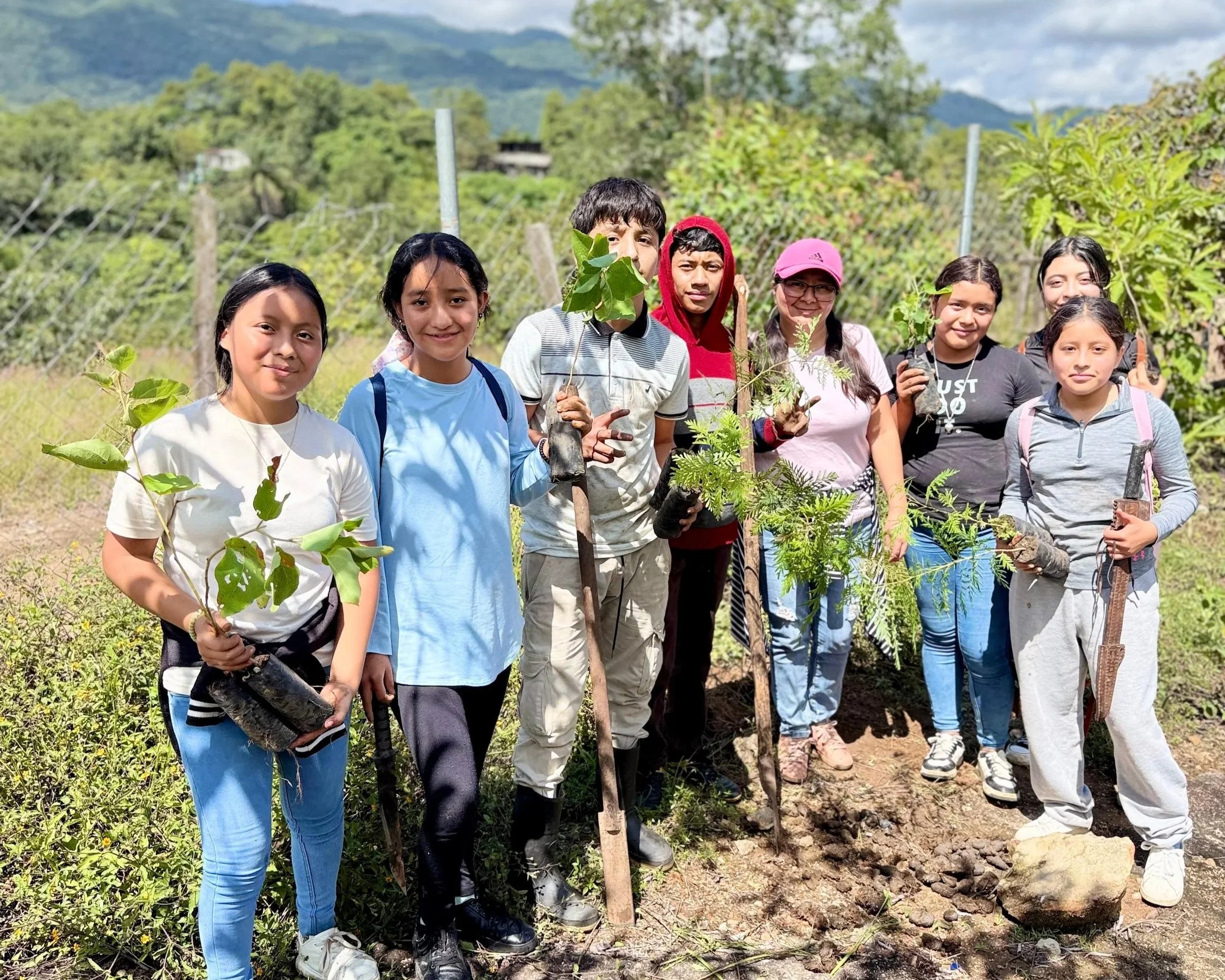
Through this collaboration, 80 families in nine communities received and planted 6,598 avocado, orange, lemon, and mandarin trees. Seedlings and vegetable seeds were also acquired to benefit these families, and training was provided in the design and management of agroecological gardens. As a result, 68 diversified home gardens were established, along with 20 plots using the MIAF system. MIAF refers to planting trees in association with corn, beans, and other crops (Milpa), increasing the immediate availability of vegetables for these families’ consumption. The gardens included native species, medicinal plants, and vegetables.
One thing that I love about GAT’s approach is their emphasis on education. I have always believed that at it’s core, F4F is an educational organization. Through our partnership in 2025, 78 children participated in educational activities such as planting and food nutrition workshops, and eight children’s gardens were established, strengthening early learning about food production and environmental stewardship. We are continuing our work with GAT in 2026 with another 39 families who will be establishing their home gardens and participating in food production and nutrition workshops. I’m excited to see this partnership grow!
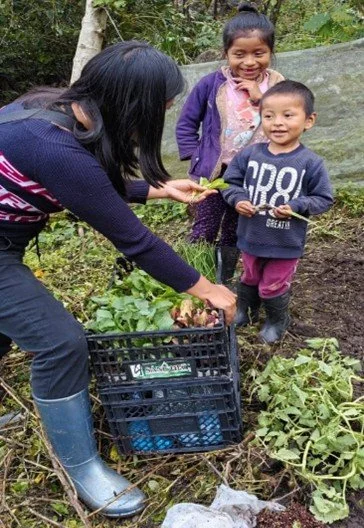
Another exciting initiative in 2025 was the establishment of a new school garden project with a public school in Pajal, a small community in Huehuetenango, Guatemala, where we partner with the coffee cooperative ACODIHUE. The initiative started because the school participated in ACODIHUE’s “Month for Nature,” a month-long event to raise awareness for the environment, in collaboration with F4F. After seeing the excitement of the students, the school's leadership asked the cooperative if F4F could help to bring food security and food sovereignty awareness to their students.
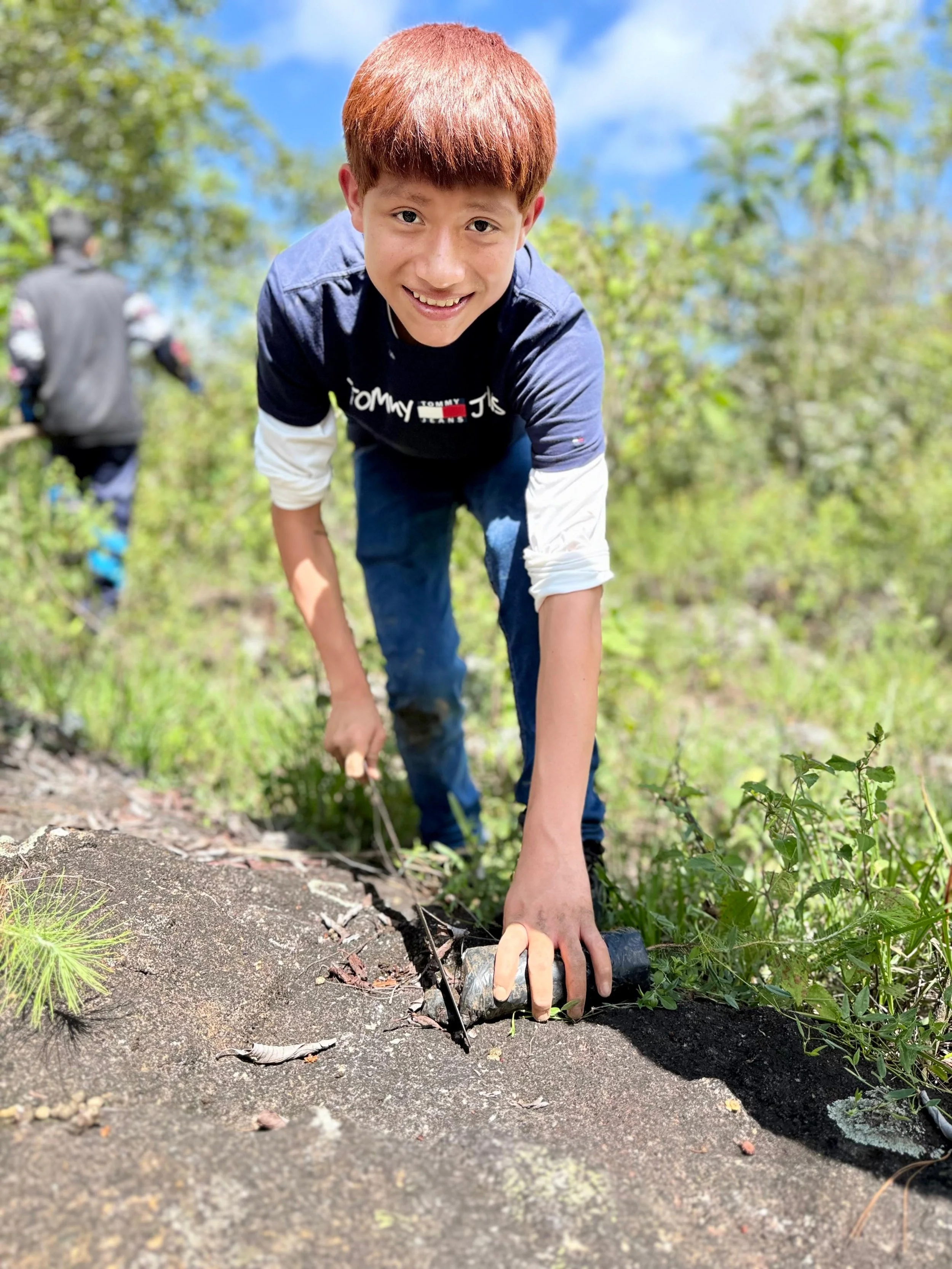
The first activity was to mentor students and teachers in establishing their school garden, teaching them basic agroecological practices, how to identify a good gardening area, how to prepare the soil, how to identify the crops, and making production and harvesting calendars. This initiative is very close to our hearts because we know that the best method to make lasting food security and food sovereignty change is to work with young minds. Children are curious and love the beauty and joy of producing their own food. In addition, through this experience, children develop love and respect for their environment by learning the importance of keeping water clean, soil healthy, and maintaining a robust forest for the benefit of everyone.
As we look forward to 2026, we hope to increase our work with young people in rural communities by expanding the school and community garden programs, and providing educational workshops and on-site training in agroecology and agroforestry, which have the potential to improve livelihoods, food systems, and climate resiliency for entire coffee-growing communities.
I hope that you will join us in celebrating the hard work and successes of our farming families in 2025 and follow along as we continue to highlight the programs, activities, and farming families working towards stable livelihoods and a food-secure future for all coffee-farming communities. I’m excited to see what this year brings!
Marcela Pino